
Shahjalal Mosque Manchester: Prayer Times, History & Everything You Need to Know
There are mosques in Manchester that most people drive past without knowing their name, and there are mosques that have quietly become cornerstones of entire communities. Shahjalal Mosque falls into the second category.
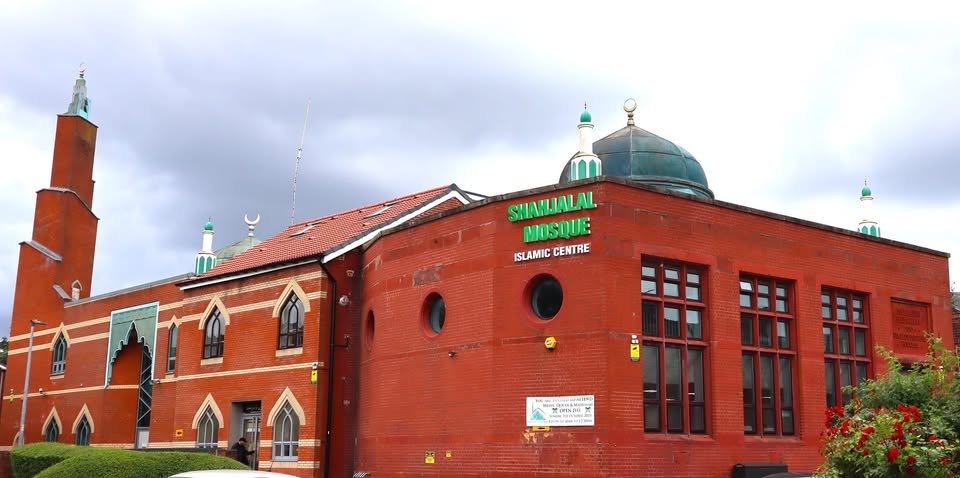
Named after the revered 14th-century Sufi saint Hazrat Shah Jalal (RA) – whose dargah in Sylhet, Bangladesh draws pilgrims from across the world – this mosque carries a name that means something specific to a large portion of Manchester’s Bangladeshi Muslim community. But its doors are open to everyone, and its role in the wider Manchester Muslim landscape is worth understanding properly.
This guide covers the mosque’s prayer times, history, facilities, location, and everything else a worshipper or visitor might genuinely want to know.
What Is Shahjalal Mosque?
Shahjalal Mosque is a Sunni Muslim mosque serving Manchester’s growing Muslim population, with a particularly strong connection to the British Bangladeshi community. Like many mosques bearing this name across the UK – there are Shahjalal mosques in Birmingham, London, and several other cities – it honours the legacy of Hazrat Shah Jalal (RA), a Yemeni-born Sufi missionary who is credited with spreading Islam across the Sylhet region of present-day Bangladesh in the 1300s.
The mosque serves as a place of daily worship, Islamic education, community gathering, and social support – a pattern common to well-established British mosques that have grown alongside their local communities over decades.
Shahjalal Mosque Manchester – Prayer Times
Prayer times at Shahjalal Mosque follow the standard astronomical calculation method used by UK mosques, adjusted daily based on the position of the sun over Manchester. Because Manchester sits at a northern latitude (approximately 53.5°N), prayer times shift dramatically between summer and winter.
| Prayer | Spring (Mar–May) | Summer (Jun–Aug) | Autumn (Sep–Nov) | Winter (Dec–Feb) |
| Fajr | 3:30–4:30 AM | 2:30–3:30 AM | 4:30–6:00 AM | 6:00–6:45 AM |
| Dhuhr | 1:05–1:30 PM | 1:05–1:30 PM | 12:45–1:15 PM | 12:30–1:00 PM |
| Asr | 5:00–6:00 PM | 5:15–6:30 PM | 3:30–4:30 PM | 2:15–3:15 PM |
| Maghrib | 7:30–8:30 PM | 9:00–9:30 PM | 6:00–7:30 PM | 3:45–4:30 PM |
| Isha | 9:30–10:30 PM | 10:30–11:15 PM | 8:00–9:15 PM | 6:30–7:30 PM |
Note: These are approximate seasonal ranges. Always verify current timings via the daily prayer time timetable at prayertimemanchester.co.uk, which is updated every day using accurate astronomical data for Manchester.
Hanafi vs Shafi’i – Which Method Does the Mosque Follow?
Shahjalal Mosque, like the majority of Bangladeshi and South Asian mosques in the UK, follows the Hanafi school of Islamic jurisprudence. This has a practical effect on Asr timing in particular – under the Hanafi method, Asr begins when an object’s shadow is twice its own height (as opposed to the Shafi’i method, where it begins at equal shadow length). This typically places Asr 45 minutes to an hour later than what some apps show by default.
If you are travelling from another mosque or switching apps, this is worth keeping in mind.
Jumma (Friday) Prayer at Shahjalal Mosque
Friday prayer is a different experience entirely. Whether it is your regular mosque or somewhere you visit occasionally for Jumma, the atmosphere shifts – the rows fill quickly, the Khutbah carries the week’s weight, and the sense of collective worship is hard to replicate in any other setting.
Friday Prayer Times
- Khutbah (sermon): Typically begins around 1:00 PM
- Prayer: Follows immediately after the Khutbah
- Second Congregation: Held during Ramadan and high-attendance periods when required
The Khutbah at Shahjalal Mosque is delivered in Bengali and English, reflecting the community’s roots while remaining accessible to the wider Muslim population of Manchester. Arabic Quranic verses and Hadith are referenced throughout, as is standard.
Practical advice: Arrive at least 20 minutes early for Jumma, particularly on the last Friday of the month or during Islamic occasions like Mawlid, when attendance is noticeably higher.
The History of Shahjalal Mosque
Who Was Hazrat Shah Jalal (RA)?
To understand why this mosque carries its name, you need to know a little about the man behind it. Hazrat Shah Jalal (RA) was born in Yemen and is believed to have travelled to the Indian subcontinent in the early 14th century at the instruction of his spiritual mentor, Syed Ahmed Kabir. He arrived in Sylhet – a region then ruled by a Raja who had reportedly mistreated a Muslim convert – and is credited with the Islamisation of the Sylhet region through his spiritual influence and missionary work.
His tomb, located in Sylhet city (now in Bangladesh), remains one of the most visited Islamic shrines in South Asia. Hundreds of thousands of pilgrims visit annually, and the city’s international airport – Osmani International Airport – is connected by flights from Manchester specifically because of the large Sylheti diaspora in the UK.
The naming of mosques after Shah Jalal (RA) across Britain reflects the deep roots of the Sylheti community – a community that makes up the majority of British Bangladeshis and has been in Manchester since at least the 1960s.
The British Bangladeshi Community in Manchester
Manchester’s Bangladeshi community is concentrated primarily in areas like Longsight, Rusholme, Levenshulme, and parts of Rochdale Road. Many families arrived in the 1960s and 1970s, often as workers in the textile and catering industries. The restaurant trade on Wilmslow Road – Manchester’s famous Curry Mile – was built substantially on the work of Bangladeshi and Pakistani families during this period.
As these communities settled and grew, the need for proper Islamic infrastructure followed. Shahjalal Mosque emerged from this context – a community institution built by and for the people who needed it.
Location and How to Get There
Address: Shahjalal Mosque, Manchester – please verify the exact street address directly with the mosque or local Islamic directory.
By Bus
- Routes serving Longsight, Rusholme, and surrounding areas connect to the mosque
- Route 53 (Manchester city centre to Levenshulme) passes through the Longsight corridor
- Route 197 connects Rusholme and Longsight
- Check Transport for Greater Manchester (TfGM) for live bus times
By Car
- Manchester city centre is approximately 2–3 miles from the Longsight/Rusholme area
- Access via A6 (Stockport Road) or A34 (Wilmslow Road)
- Street parking available on surrounding roads – arrives early for Jumma and Eid
By Metrolink
- Nearest Metrolink stations: Levenshulme (East Didsbury line) or Piccadilly Gardens (city centre)
- From Piccadilly Gardens, buses connect directly to Longsight and Rusholme
Facilities at Shahjalal Mosque
Like most well-established British mosques, Shahjalal Mosque serves the community in multiple ways beyond the five daily prayers. The facilities typically available include:
- Main Prayer Hall – accommodating several hundred worshippers
- Women’s Prayer Area – dedicated space with separate entrance and wudu facilities
- Wudu (Ablution) Facilities – for men and women separately
- Madrasah (Islamic School) – Quran classes, Islamic studies, and Arabic for children
- Funeral and Janazah Services – coordinating Islamic funeral rites for the community
- Nikah (Marriage) Ceremonies – officiated by the mosque’s Imam
- Community Hall – used for Islamic events, lectures, and community gatherings
The mosque also acts as a point of contact for new Muslims seeking guidance, for families navigating halal food and services in Manchester, and for community members needing social support.
Ramadan at Shahjalal Mosque
Ramadan transforms the mosque’s atmosphere completely. The intensity and beauty of the holy month means that even worshippers who attend only occasionally during the rest of the year come back consistently during Ramadan.
Taraweeh Prayers
Nightly Taraweeh prayers are held after Isha throughout Ramadan. The mosque typically invites a Hafiz – someone who has memorised the entire Quran – to lead the congregation, completing one Juz (section) of the Quran per night across the 30 nights of Ramadan.
Community Iftar
On many evenings during Ramadan – particularly weekends – the mosque organises a community iftar, where worshippers break their fast together. These gatherings are among the most socially meaningful moments the mosque hosts. Food is shared, conversations happen across generational lines, and the community feels genuinely like a community.
Laylat al-Qadr
The final ten nights of Ramadan – in which Laylat al-Qadr (the Night of Power) is believed to fall – see the mosque at its busiest and most spiritually charged. I’tikaf (the practice of spending extended time in the mosque in worship) is observed by a number of worshippers, and special night prayers and Quran recitation sessions are held.
Eid Prayers at Shahjalal Mosque
Eid ul-Fitr 2026
Eid ul-Fitr 2026 is expected around 20th March 2026, marking the end of Ramadan. Eid prayers at Manchester mosques typically begin from 7:30 AM, with some mosques offering a second congregation around 9:00 AM for those who cannot attend the first.
Eid ul-Adha 2026
Eid ul-Adha 2026 falls around 26th–27th May 2026. Morning prayers usually begin from 7:00 AM. Mosques fill up very quickly on both Eid days – arriving early is strongly recommended.
For a full list of Eid prayer times across Manchester mosques, see the Eid prayer times page at Prayer Time Manchester
Shahjalal Mosque vs Other Manchester Mosques
Manchester has a rich network of mosques, each serving different communities and traditions. Here is how Shahjalal Mosque fits into that wider picture:
| Mosque | Location | Primary Community |
| Shahjalal Mosque | South Manchester | British Bangladeshi (Sylheti heritage) |
| Manchester Central Mosque | Longsight, M13 | South Asian (mixed) |
| Faizan-e-Islam Mosque | Rochdale Road | South Asian (Barelvi tradition) |
| Khizra Mosque | Cheetham Hill | North Manchester community |
| Didsbury Mosque (MWL) | Didsbury | International/diverse congregation |
| Masjid Quba | Rusholme | Local neighbourhood mosque |
Each mosque has its own character, traditions, and community feel. Shahjalal Mosque’s particular strength lies in its connection to the Sylheti Bangladeshi community – a connection that makes it more than just a place to pray for many families who have worshipped there for generations.
Visiting Shahjalal Mosque as a Non-Muslim
Non-Muslim visitors are welcome at Shahjalal Mosque, as at most British mosques. If you are visiting:
- Dress modestly – shoulders and legs covered; women should bring a headscarf
- Remove shoes before entering the prayer hall
- Avoid scheduling your visit during active prayer times unless you plan to observe quietly
- The mosque’s staff and community members are generally welcoming to respectful questions
Manchester has a strong interfaith tradition, and mosques in the city have actively participated in dialogue and educational outreach events over the years.