
5 PILLARS OF ISLAM
Most people have heard the phrase before. But if you actually want to understand what it means to be a Muslim, this is where you start. Not with a long list of rules or rituals – just five things. Five practices that have held this faith together for over 1,400 years, across every country, every culture, and every generation.
Every Muslim, whether they are a doctor in Manchester, a farmer in Pakistan, or a student in Egypt, follows these same five pillars. That consistency is part of what makes Islam what it is.
If you are a Muslim living in Manchester and want to stay on top of your daily prayer times in Manchester, this guide will also help you understand why Salah — one of the five pillars — matters so deeply.
Every Muslim, whether they are a doctor in Manchester, a farmer in Pakistan, or a student in Egypt, follows these same five pillars. That consistency is part of what makes Islam what it is
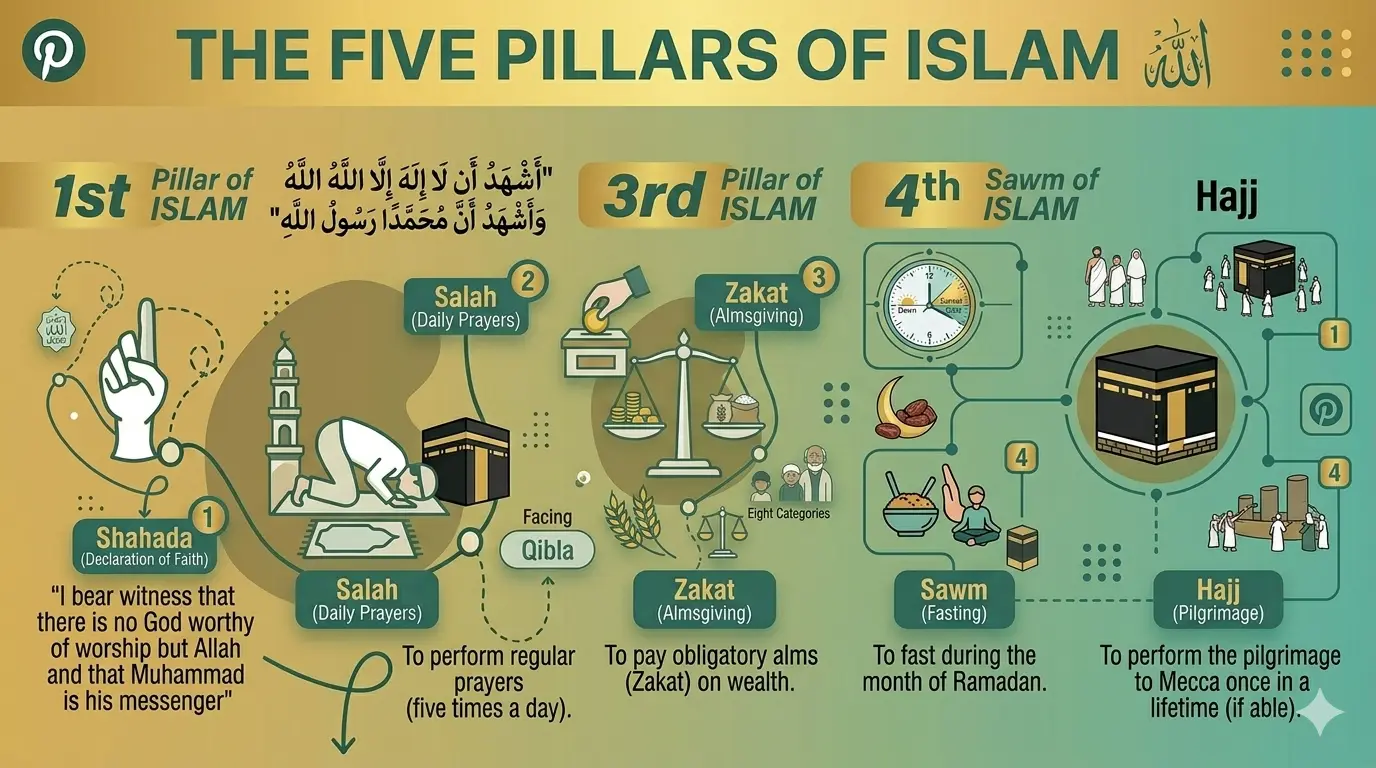
1. Shahada — The Declaration of Faith
Before anything else, there is the Shahada. It is two sentences, and it is the entry point into Islam:
“There is no god but Allah, and Muhammad is the messenger of Allah.”
Simple words, but the weight behind them is enormous. When you truly believe this – not just say it, but actually believe it – it changes how you see everything. Your purpose, your decisions, how you treat people, what you chase in life. It all shifts.
When someone accepts Islam, the first thing they do is recite the Shahada. And for those who have grown up Muslim, it is something they return to again and again throughout their lives. It is not a one-time statement. It is an ongoing commitment.
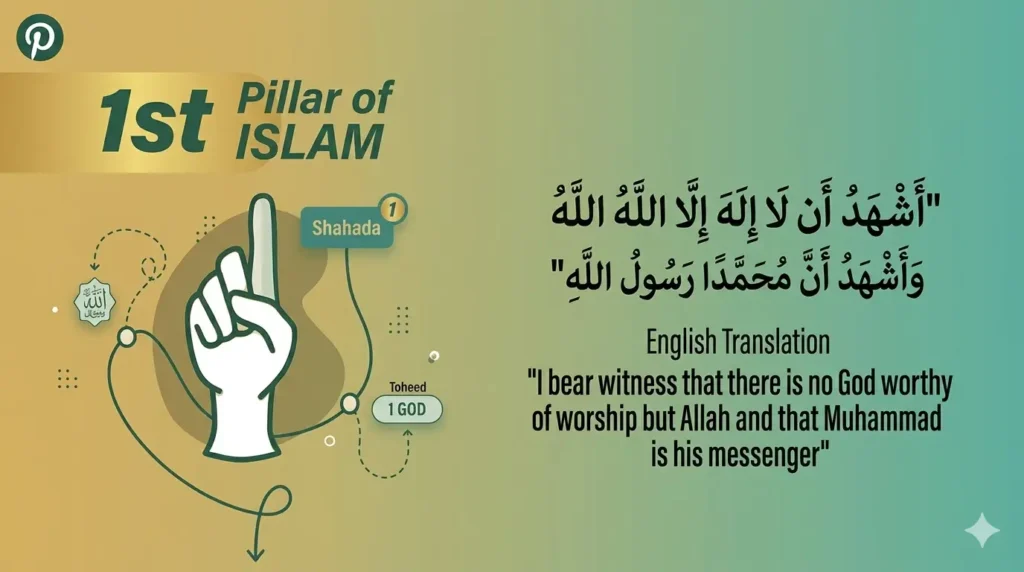
2. Salah – The Five Daily Prayers
Five times a day, every day. That is what Salah asks of you. And if you have ever wondered why Muslims stop mid-conversation or step away from their desk at certain times of the day, this is why.
The five prayers are Fajr before sunrise, Zuhr at midday, Asr in the afternoon, Maghrib just after sunset, and Isha at night. Each one takes only a few minutes. But those few minutes – spread across the day – keep a person grounded in a way that is hard to explain until you experience it yourself.
There is something about stopping five times a day, stepping away from everything, and just standing before Allah that puts life back into perspective. Work stress, money problems, family worries – none of it disappears, but somehow it all feels more manageable after prayer.
For Muslims living in Manchester, keeping track of accurate prayer times is something the community takes seriously. The times shift every single day, which is why having a reliable source matters. You can check today’s prayer times in Manchester including times for Cheetham Hill, Bolton, and Trafford Park.
| Prayer | Arabic Name | Time |
| Fajr | الفجر | Before Sunrise |
| Zuhr | الظهر | Midday |
| Asr | العصر | Afternoon |
| Maghrib | المغرب | Just After Sunset |
| Isha | العشاء | Night |
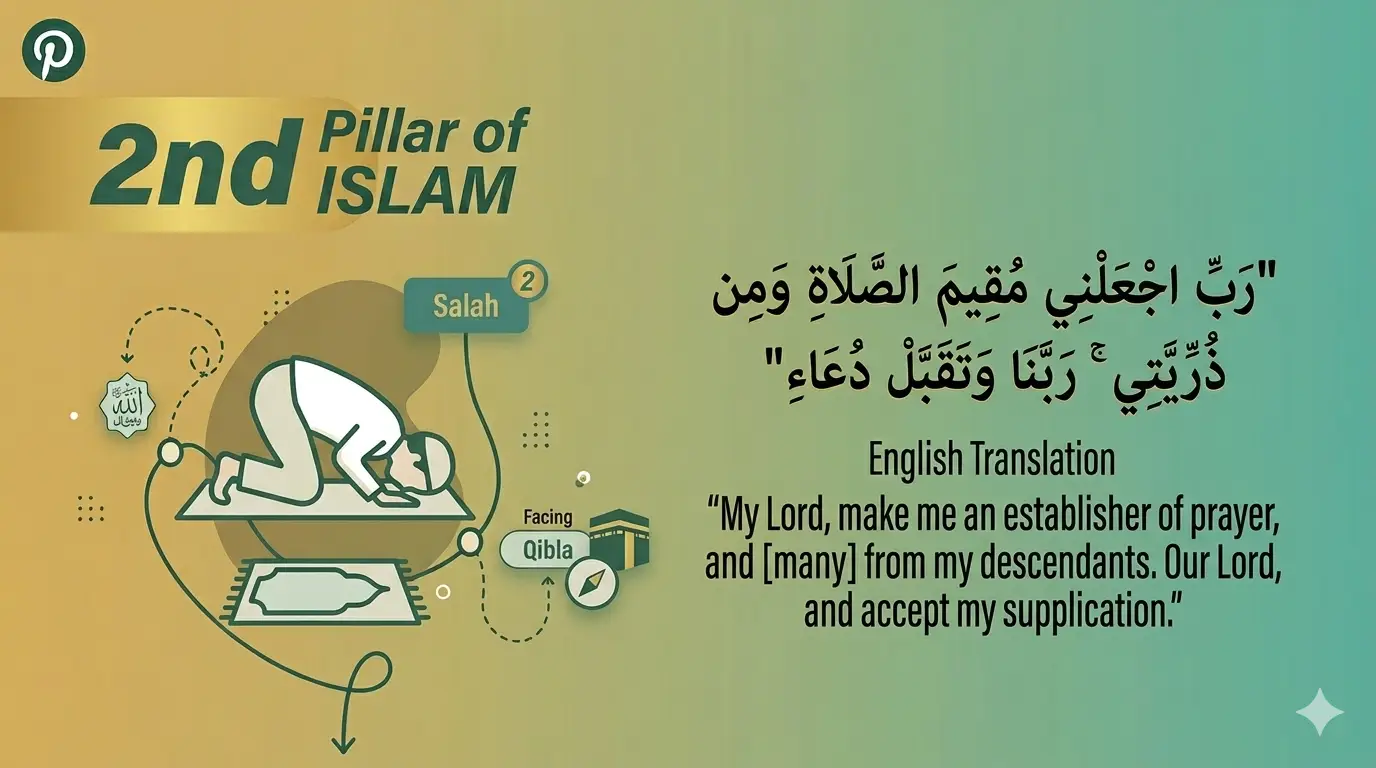
3. Zakat – Obligatory Charity
This one surprises people who are new to Islam. Zakat is not a charity you give when you feel generous. It is a fixed obligation. If your savings have been above a certain threshold for a full year, you give 2.5% of that amount to those who need it. Every year. No exceptions for those who qualify.
The idea behind it is straightforward. Wealth has a tendency to concentrate. Without some kind of system to redistribute it, the gap between those who have and those who do not just keeps growing. Zakat is Islam’s built-in answer to that problem.
It goes to the poor, the indebted, travellers who are stranded, and others who are genuinely struggling. And beyond the practical impact it has on those who receive it, it does something for the person giving it too. It is a reminder that what you have is not entirely yours. You worked for it, yes. But part of it was always meant for someone else.
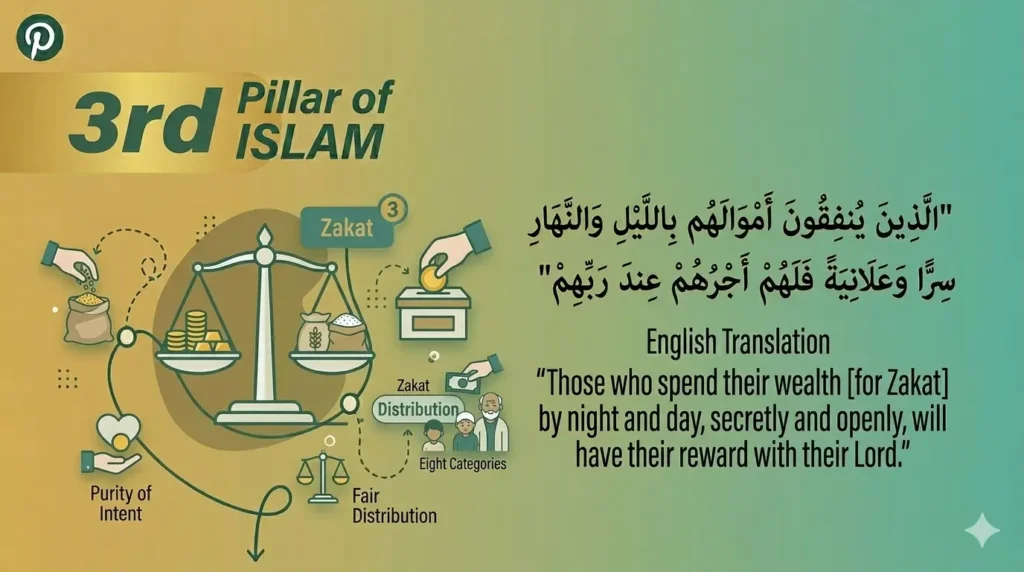
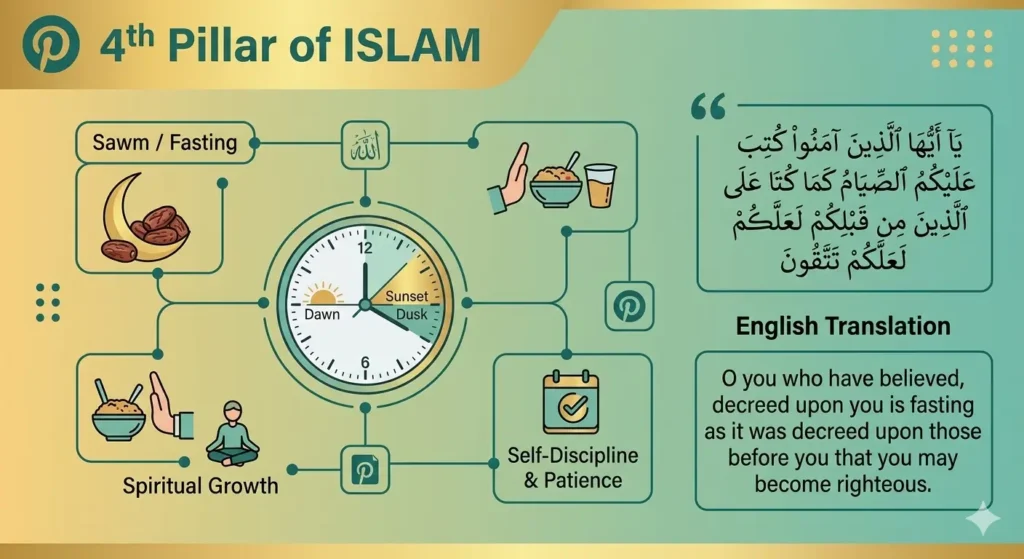
4. Sawm – Fasting in Ramadan
Every year, for one month, Muslims fast from the moment dawn breaks until the sun sets. No food, no water, no smoking. From Fajr to Maghrib, every single day throughout the month of Ramadan.
To someone who has never done it, it sounds like punishment. But ask any Muslim who observes Ramadan consistently, and they will tell you it is the best month of the year.
When you take food and drink out of the equation, your day looks completely different. All the time and energy that normally goes into meals, snacks, coffee runs, and thinking about what to eat next – it is suddenly freed up. And that space gets filled with prayer, reflection, Quran, and time with family.
There is also something about hunger that creates empathy in a way that nothing else does. You feel, even briefly, what it is like to go without. And that feeling stays with you long after Ramadan ends.
During Ramadan, Muslims in Manchester rely heavily on accurate Fajr and Maghrib times to know exactly when to start and break their fast. You can also check times for areas like Cheetham Hill and Bolton.
5. Hajj – The Pilgrimage to Makkah
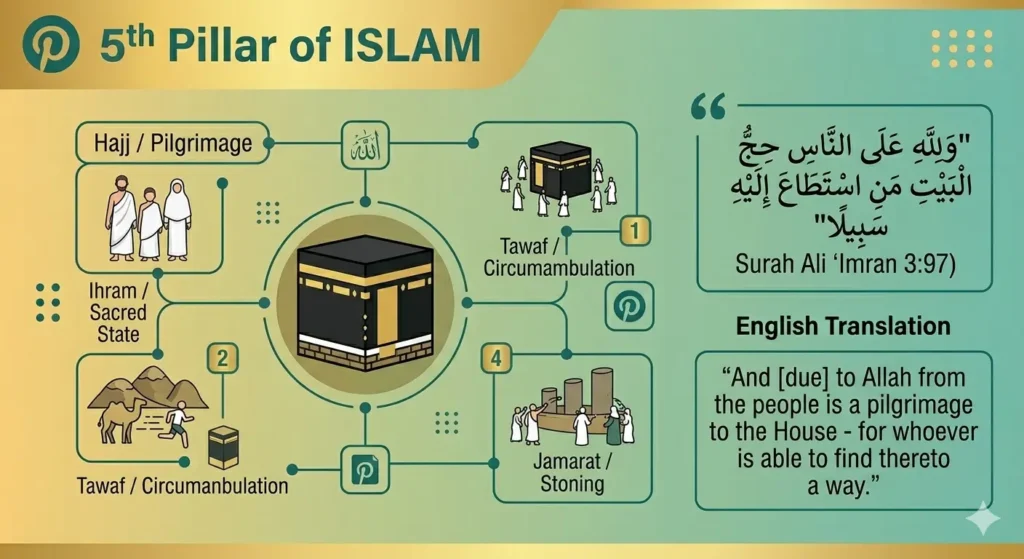
Once in a lifetime, if you are physically and financially able, you make the journey to Makkah. That is Hajj. And for the millions of Muslims who have performed it, it tends to divide their life into two parts – before Hajj and after.
It takes place every year during the Islamic month of Dhul Hijjah. Pilgrims circle the Kaaba, walk between the hills of Safa and Marwa, stand together on the plain of Arafat, and perform a series of rituals that connect back to the Prophet Ibrahim and his family.
What makes Hajj unlike anything else is the scale and the equality of it. Millions of people, from every country on earth, all wearing the same simple white cloth. No designer labels, no indicators of wealth or status. A billionaire and a factory worker standing side by side, both doing the same thing, both equal before Allah.
People come back from Hajj changed. Not in a dramatic, visible way necessarily – but something shifts internally. Priorities rearrange themselves. Things that felt important before suddenly feel less so.
Why These Five Pillars?
It is worth asking. Out of everything Islam teaches, why are these five the pillars?
Because they cover everything that matters. Shahada takes care of belief. Salah takes care of your daily connection with Allah. Zakat takes care of your relationship with your community. Sawm teaches you discipline and gratitude. And Hajj takes care of your place in the bigger picture of humanity and faith.
Together, they create a life that is balanced — spiritually, socially, and personally. They have been practised by over a billion people for more than fourteen centuries. And they continue to do exactly what they were always meant to do.
If you are based in Manchester and want to stay consistent with your Salah, visit prayertimemanchester.co.uk for accurate prayer times updated every single day. We also cover areas including Trafford Park, Bolton, and Cheetham Hill.